


How to Become an HVAC Technician?
Becoming an HVAC technician in the United States typically requires a high school diploma or GED, followed by technical training, hands-on apprenticeship experience, and certifications like EPA 608. Choosing this career path means you will benefit from a high level of job security, an attractive salary, and an increase in work opportunities since the demand for HVAC professionals keeps rising. HVAC technicians are essential for providing comfort in residential, commercial, and industrial places all over the country. They are dealing with everything from installing air conditioning in southern states to providing heating systems in northern states, and the need for their services grows as both infrastructure and aging systems require them.
HVAC work is usually part of the broader budgeting process of building or remodeling. For example, real estimate services can assist in determining the cost and the scope of the climate control system installation. This coupling clearly indicates how crucial HVAC skills are to the overall construction industry.
Role of an HVAC Technician
HVAC technicians install, maintain, and repair heating, ventilation, air conditioning, and refrigeration systems. Their duties help guarantee that indoor environments are both safe, comfortable, and efficient in terms of energy use.
Technicians carry out several tasks such as troubleshooting problems, changing broken parts, and carrying out standard maintenance. They also have to understand electrical circuits, thermostat controls, and even smart home gadgets. Regardless of whether it's a winter furnace breakdown or a summer cooling system installation, their job is technical and practical.
Why Choose an HVAC Career?
Working as an HVAC professional is a wise decision for those who like hands-on, practical work instead of being an office drone. Moreover, job stability is almost guaranteed in this industry since heating, ventilation, and air conditioning units remain vital components of nearly every building in the U.S.
Besides constant job opportunities, HVAC workers receive good pay and even get a chance to make extra money through overtime. As a matter of fact, lots of them, after years of hanging around the trade, having learned the ropes, turn into small business owners. By the time someone becomes an expert HVAC estimator, they often have a deep understanding of system costs, labor requirements, and project planning, making them valuable assets in both fieldwork and management.
Basic Requirements to Get Started
A high school diploma or equivalent is the minimum qualification for entering the HVAC field. A background in mathematics, physics, and technical drawing will certainly be beneficial. Besides, working in HVAC often requires one to be physically fit as it includes the handling of heavy equipment, ladder climbing, and working in tight spaces.
Besides cognitive aspects like critical reasoning, thoroughness, and learning fervor, physical fitness is also a must for this line of work. With the future HVAC systems being more technologically capable, understanding tech trends will be essential for growing HVAC technicians.
Guide to Becoming an HVAC Technician
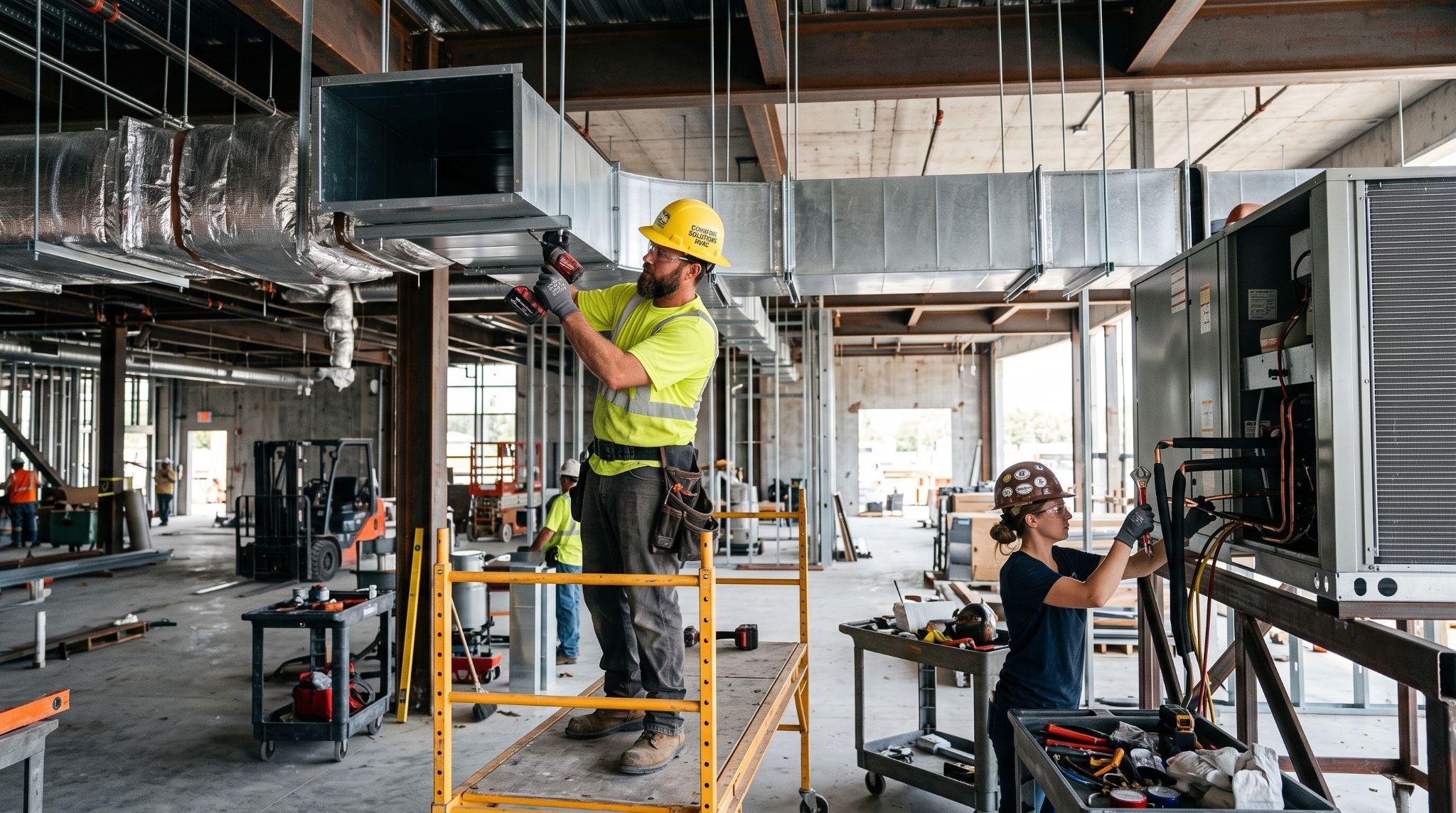
Step 1: Complete High School Education
Creating a strong educational base is the main move. Students in high school seeking an HVAC career should dedicate their time to subjects such as algebra, physics, and technical education. These courses contribute to the development of analytical skills and a foundation for reliable mechanical estimating necessary for the trade.
Step 2: Step up in HVAC Training Programs
Most candidates for technician jobs go to a technical school or community college after graduating from high school. The trade school program duration is typically 6 months to 2 years, and apart from theoretical knowledge, hands-on training is also imparted.
Typical components of such courses are:
- Design of HVAC Systems
- Principles of Refrigeration
- Electrical Systems
- Safety Guidelines
Step 3: Accumulate Hands-On Experience
Work-based learning is highly important. Apart from theory, many students engage in work experience through internships or entry-level positions to hone their skills. Apprenticeships grant the privilege of earning while learning and being guided by a veteran technician.
Step 4: Get EPA 608 Certification
Technicians working with HVAC in the U.S. have to secure EPA 608 certification to legally manage refrigerants. Such certification guarantees that individuals are aware of the environmental laws and safe handling methods.
Step 5: Get Licensed (If Required)
Requirements for licensing change from one state to another. Some states may require technicians to take a test and show that they have work experience before they will be allowed to operate independently. It is very important to check the local regulations for compliance.
Types of HVAC Training Programs
Different educational paths are available depending on career goals and time commitment.
|
Program Type |
Duration |
Key Benefits |
|
Certificate Program |
6–12 months |
Fast entry into the workforce |
|
Associate Degree |
2 years |
Deeper technical knowledge |
|
Apprenticeship |
3–5 years |
Paid training with real-world experience |
Each choice offers a different route to entering the HVAC industry, with apprenticeships giving the perk of getting paid while learning on the job.
Basic Skills That Every HVAC Technician Should Have
What makes a great HVAC technician is a mix of technical know-how and people skills. You need to have a good understanding of machines so that you can figure out what each part does. Besides, strong puzzle-solving abilities come in handy when you want to diagnose and repair a malfunction quickly.
One more thing that comes to a great HVAC technician's arsenal, apart from masterful problem-solving skills, is courtesy and a knack for a clear, easy-to-understand explanation of technical stuff to people who are not half as familiar with it as you. A very significant one: good time management makes sure that even if they have to work non-stop, they will manage to get the last job done before closing the office.
Common HVAC Tools and Equipment
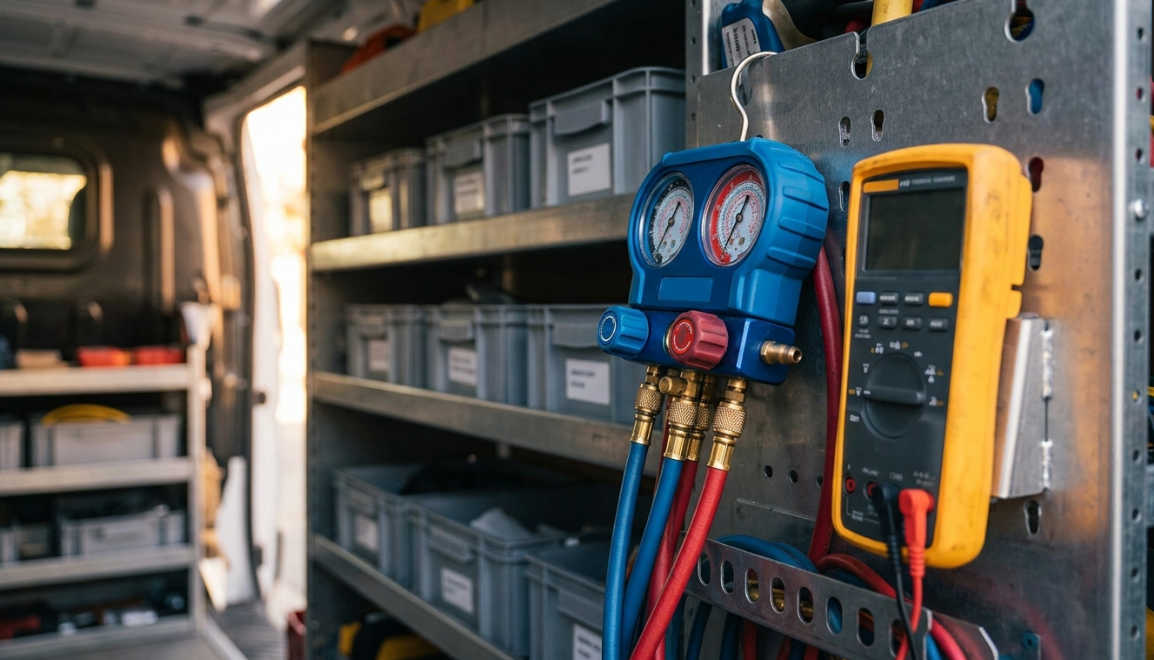
To get the job done, HVAC technicians have to use a huge assortment of tools. On the list are measuring devices for the level of various parameters, different types of hand tools, and those for dealing with refrigerating agents..
|
Tool |
Purpose |
|
Multimeter |
Measures electrical values |
|
Refrigerant Gauges |
Monitor pressure levels |
|
Vacuum Pump |
Removes air from systems |
|
Leak Detector |
Identifies refrigerant leaks |
As technology progresses, digital tools and software are being used more and more in the industry.
Work Environment
HVAC technicians can be found working in various environments such as residential houses, office buildings, and factories. Since different tasks require different locations, the job may include both working inside and outside.
Sometimes the work can be stressful as there are busy times, especially when the weather is very hot or very cold. The work can indeed be hard, but at the same time, it changes your day, and you get the pleasure of resolving problems that people face in their everyday lives.
Salary Expectations in the U.S.
In the United States, HVAC technicians receive good compensation; however, salary depends on various factors such as the level of experience, city, and area of expertise.
|
Experience Level |
Average Salary |
|
Entry-Level |
$35,000–$45,000 |
|
Mid-Level |
$50,000–$65,000 |
|
Experienced |
$70,000+ |
Technicians who become experts in their field or launch their own ventures may increase their income levels quite substantially.
Job Outlook and Growth
It is anticipated that the HVAC sector will see moderate growth over time. Factors such as a shift towards energy-efficient appliances, integration of smart technology in homes, and implementation of stricter environmental laws contribute to this upward trend.
The need for competent workers will not diminish as existing systems are phased out and new buildings are constructed throughout the nation.
Specializations in HVAC
Apart from working as general technicians, HVAC professionals have an option to focus on certain segments. This enables them to deepen their knowledge and increase their incomes.
The majority of specializations revolve around residential HVAC, commercial refrigeration, and environmentally friendly energy solutions. Besides, there are technicians who concentrate on system architecture or offer energy auditing and consulting services.
How Long It Takes to Become an HVAC Technician
The duration of becoming an HVAC technician depends largely on what career path one chooses. One could be ready to start working after completing short programs of only a few months, while apprenticeships may span several years.
Working in trainee positions may be possible even before one finishes training. Over the course of a career, individuals continue to develop and hone their capabilities.
Cost of HVAC Training Programs
Depending on the offering institution and also on the type of program, fees for training courses can range extensively.
|
Program Type |
Estimated Cost |
|
Certificate |
$1,500–$5,000 |
|
Associate Degree |
$10,000–$15,000 |
|
Apprenticeship |
Often low-cost or paid |
Financial aid, scholarships, and grants are often available to help offset costs.
Online vs In-Person HVAC Training
You can do parts of your HVAC training online, for instance, theory, etc., but experiencing things firsthand is what really matters. Most training programs nowadays have a hybrid option, so that in such a case, you will be able to do theory online and do the labs in person.
This means that you won't be limited to just studies, but you will be able to handle other things while studying and at the same time get your hands on the skills practically.
Entry-Level Job Opportunities
Usually, those who are new in the HVAC line of work will be starting in very low-level jobs like installer assistants or maintenance technicians. Through these positions, new technicians gain exposure to the practical world, and their confidence is built up as they work with real systems.
After some time, the new skills learned will enable them to do more involved tasks and take on a larger workload.
Career Advancement Opportunities
Experience gained by HVAC technicians paves the way for their progression into more senior roles, as well as sometimes becoming the chief of an HVAC team or even a one-person business. Some people go for an extra level of expertise in a particular job in the trade, while most of them choose to be project managers or even consultants.
The competencies acquired in this HVAC trade can also lead to opportunities in other areas of building and engineering.
FAQs
1. How long does it take to become an HVAC technician in the US?
The time for training is usually from 6 months to 2 years, in addition to hours spent gaining experience.
2. Is EPA 608 certification compulsory?
Yes, it is a legal requirement if one is to work with refrigerants in the United States.
3. Can I be an HVAC technician if I have no college degree?
Of course, instead of a college degree, one can attend a trade school and also learn through an apprenticeship.
4. What are the average earnings of HVAC technicians in the US?
The salary of HVAC techs varies widely depending on their level of experience; their earnings can go from approximately $35, 000 to well over $70, 000.
5. Is HVAC a good career option?
Certainly, it provides strong job demand, stability, as well as chances for personal development and advancement.
- Memes & Cultura da Comunidade
- Artigos e Análises
- Pessoal
- Oportunidade
- Projeto
- Conhecimento
- Dúvidas & Pedidos de Ajuda
- Reflexões & Opiniões
- Tendências
- Jogos
- Lançamentos & Anúncios
- Saúde & Bem Estar
- Eventos & Convites
- Conteúdo Técnico
- Entretenimento
- Networking
- Festas & Festivais
- Religião
- Iniciativas de Impacto
 Portuguese (Brazil)
 English
 Arabic
 French
 Spanish
 Portuguese
 Deutsch
 Turkish
 Dutch
Dutch
 Italiano
 Russian
 Romaian
 Greek
Greek