


Processed Meat Market Outlook 2026-2034: Size, Share, Trends, Demand and Forecast
Market Overview
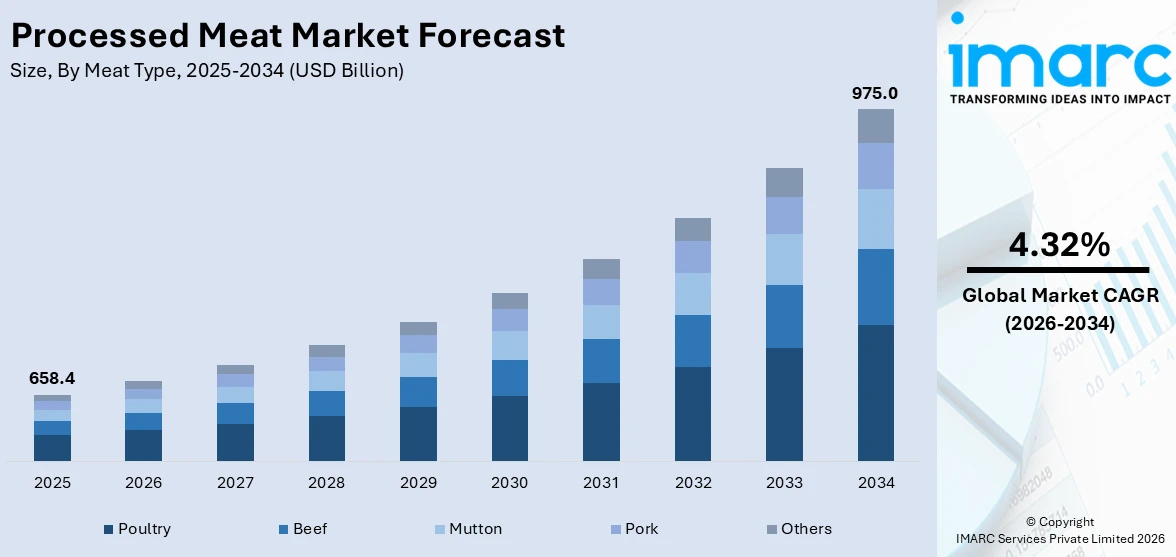
The global processed meat market size reached USD 658.4 Billion in 2025. Looking forward, IMARC Group expects the market to reach USD 975.0 Billion by 2034, exhibiting a growth rate (CAGR) of 4.32% during 2026–2034. North America currently dominates the regional landscape, supported by a well-established meat processing industry, strong consumer demand for convenient food products, and advanced distribution infrastructure. The market is primarily driven by increasing consumer demand for convenience and protein-rich diets, continuous technological advancements in food processing, globalization of food cultures, rising disposable income levels, and evolving consumer preferences.
Processed Meat Market Report: Key Highlights
-
Market Size and Growth: The global processed meat market was valued at USD 658.4 Billion in 2025 and is projected to reach USD 975.0 Billion by 2034, registering a CAGR of 4.32% during 2026–2034.
-
Regional Leadership: North America represents the leading regional market, supported by high consumer demand for convenience foods, an established meat processing industry, and advanced distribution networks.
-
By Meat Type: The market is segmented into poultry, beef, mutton, pork, and others, with poultry holding the leading position owing to its affordability, versatility, widespread consumer acceptance, and perceived health benefits.
-
By Product Type: The market includes fresh-processed meat, raw fermented meat, raw-cooked meat, pre-cooked meat, cured meat, dried meat, and others, with fresh-processed meat representing the dominant segment.
-
By Processing Type: Chilled, frozen, and canned are the major segments, with chilled processed meat accounting for the largest share due to consumer preference for freshness, taste, and texture.
-
By Distribution: Institutional sales (HoReCa) and retail sales constitute the key distribution channels, with retail sales leading owing to extensive supermarket, hypermarket, grocery, specialty retail, and online distribution networks.
-
Key Market Drivers: Increasing demand for convenient and ready-to-eat food products, rising consumption of protein-rich diets, growing disposable incomes, technological advancements in meat processing, and expanding organized retail channels.
-
Key Market Trends: Growing preference for convenient meal solutions, increasing demand for protein-rich products, advancements in food processing and packaging technologies, and rising availability of premium, organic, and health-focused processed meat products.
-
Key Market Players: Leading companies operating in the global processed meat market include BRF SA, Cargill Inc., Foster Farms, Hormel Foods Corporation, JBS SA, Marel hf, Marfrig, National Beef, Nippon Ham Foods Ltd., OSI Group, Perdue Farms, Pilgrim's Pride, Sadia, Sanderson Farms Inc., Sysco, and Tyson Foods.
Request for a Sample Report for Detailed Evaluation: https://www.imarcgroup.com/processed-meat-market/requestsample
What Is Driving Processed Meat Market Growth in 2026?
Increased Convenience and Changing Lifestyles
The growing preference for convenient and quick meal solutions is significantly supporting the expansion of the processed meat market. As urbanization increases and consumers manage increasingly demanding professional and personal schedules, the demand for ready-to-eat and easy-to-prepare food products continues to rise. Processed meat products, including sausages, ham, patties, and packaged meat preparations, offer time-saving solutions while providing protein and versatility across different meal occasions. The increasing participation of the working population and changing household structures are further encouraging consumers to choose products that require minimal preparation. According to the United Nations, more than 50% of the global population currently lives in urban areas, a proportion projected to reach 68% by 2050. This growing urban population is strengthening demand for convenient food options, encouraging manufacturers to introduce diverse processed meat products with improved taste, quality, and shelf life. Furthermore, expanding supermarket networks, convenience stores, and online grocery platforms are making these products more accessible, supporting sustained market growth.
Growing Demand for Protein-Rich Diets
Increasing health consciousness and growing awareness of the importance of protein in daily nutrition are driving demand for meat-based food products. Protein plays an essential role in muscle development, tissue repair, and the maintenance of overall health, making protein-rich foods an important component of consumer diets. Processed meat products provide a convenient source of dietary protein and are increasingly incorporated into everyday meals, particularly among individuals seeking accessible and versatile nutritional options. The growing popularity of fitness-oriented lifestyles and changing dietary preferences are further supporting the consumption of poultry, beef, pork, and other processed meat varieties. Manufacturers are responding to these preferences by diversifying their product portfolios and introducing formulations with improved nutritional profiles, reduced sodium content, and fewer artificial additives. Furthermore, innovations in processing and preservation techniques are helping companies maintain product quality while addressing consumer expectations regarding nutrition, flavor, and convenience. These developments are strengthening the position of processed meat products across retail and food service channels.
Technological Advancements in Food Processing
Continuous advancements in food processing, preservation, and packaging technologies are transforming the global processed meat industry. Techniques such as high-pressure processing (HPP), vacuum packaging, controlled-atmosphere packaging, smoking, and curing are improving product safety, quality, and shelf life. These technologies help manufacturers maintain the taste, texture, and nutritional characteristics of meat products while reducing spoilage and improving operational efficiency. According to the World Health Organization, approximately 600 million people worldwide, or nearly one in ten individuals, fall ill after consuming contaminated food each year, while around 420,000 deaths occur annually. This highlights the importance of effective food safety systems and advanced processing technologies. Furthermore, technological developments are enabling manufacturers to increase production capacity, maintain consistent product standards, and minimize food waste. The emergence of cultivated meat technologies is also creating new possibilities for the industry. For instance, on March 21, 2024, Meatable announced a breakthrough using its patented Opti-Ox technology, reducing cell differentiation time to four days and supporting faster and more scalable cultivated meat production. Such innovations are encouraging the development of more efficient and sustainable meat production systems, contributing to the evolving market landscape.
Processed Meat Market Segmentation Analysis
IMARC Group provides an analysis of the key trends in each segment of the global processed meat market, along with forecasts at the global, regional, and country levels from 2026–2034. The market has been categorized based on meat type, product type, processing type, and distribution.
By Meat Type
-
Poultry
-
Beef
-
Mutton
-
Pork
-
Others
Poultry represents the leading segment in the global processed meat market, supported by its widespread consumer acceptance, affordability, versatility, and perceived nutritional benefits. Chicken, in particular, is considered a lean source of protein and generally contains lower levels of saturated fat compared with several red meat varieties, making it an attractive option among health-conscious consumers. Its availability across different markets and suitability for diverse culinary applications further strengthen its popularity. Processed poultry products, including sausages, nuggets, patties, and ready-to-cook preparations, are widely consumed across residential and food service settings. Moreover, continuous advancements in poultry processing, flavoring, and packaging are enabling manufacturers to introduce innovative products that cater to evolving consumer tastes. The growing preference for convenient, protein-rich food options and the relatively affordable price of poultry compared with other meat varieties continue to reinforce the segment's leading position.
By Product Type
-
Fresh-Processed Meat
-
Raw Fermented Meat
-
Raw-Cooked Meat
-
Pre-Cooked Meat
-
Cured Meat
-
Dried Meat
-
Others
Fresh-processed meat represents the leading product segment in the global processed meat market, supported by strong consumer demand for convenient, versatile, and easy-to-prepare food products. This category includes products such as sausages, patties, and meatballs, which are generally prepared from ground or minced meat combined with ingredients that enhance flavor and texture. Their popularity is driven by their versatility across different cuisines and their suitability for quick meal preparation. Fresh-processed meat products can be incorporated into a wide range of dishes, including sandwiches, burgers, pasta preparations, and traditional meals, making them appealing to diverse consumer groups. Furthermore, manufacturers are increasingly focusing on product innovation to address changing dietary preferences by introducing options with reduced fat, sodium, and artificial additives. Improvements in packaging and preservation technologies are also helping maintain product freshness and quality, strengthening the segment's position in the market.
By Processing Type
-
Chilled
-
Frozen
-
Canned
Chilled processed meat accounts for the largest share of the market, primarily driven by consumer preference for products that retain the taste, texture, and characteristics associated with fresh meat. Chilled products are maintained under refrigerated conditions rather than frozen storage, making them an attractive option for consumers seeking convenient meat products without compromising on sensory quality. Sausages, packaged meat cuts, and other refrigerated preparations are widely available through supermarkets, hypermarkets, and specialty retailers. The perception that chilled meat products offer superior freshness and quality compared with certain frozen and canned alternatives further supports segment demand. Moreover, improvements in refrigeration, vacuum packaging, and preservation technologies are helping manufacturers extend product shelf life while maintaining quality. The growing availability of chilled processed meat products across modern retail channels continues to strengthen this segment's leading position.
By Distribution
-
Institutional Sales (HoReCa)
-
Retail Sales
-
Supermarkets and Hypermarkets
-
Grocery Stores
-
Specialty Retailers
-
Online Stores
-
Others
-
Retail sales represent the leading distribution segment in the global processed meat market, supported by the extensive availability of products across supermarkets, hypermarkets, grocery stores, specialty retailers, and online platforms. Retail outlets provide consumers with convenient access to a wide variety of processed meat products, including fresh, chilled, frozen, and packaged options. The expanding global supermarket culture and increasing preference for one-stop shopping experiences are further supporting the growth of this segment. In addition, the growing adoption of online grocery shopping is improving product accessibility through digital ordering and home delivery services. Retailers are also expanding their meat product assortments to include premium, organic, flavored, and health-focused options, catering to diverse consumer preferences. Meanwhile, improved cold-chain infrastructure and advanced packaging solutions are helping retailers maintain product quality and safety throughout storage and distribution. These factors continue to reinforce the dominance of retail sales in the processed meat market.
Processed Meat Market Regional Analysis
-
North America: United States, Canada
-
Europe: Germany, France, United Kingdom, Italy, Spain, Russia, Others
-
Asia Pacific: China, Japan, India, South Korea, Australia, Indonesia, Others
-
Latin America: Brazil, Mexico, Argentina, Colombia, Chile, Peru, Others
-
Middle East and Africa: Turkey, Saudi Arabia, Iran, United Arab Emirates, Others
North America holds the leading position in the global processed meat market in 2025, supported by high consumer demand for convenience foods, a well-established meat processing industry, and advanced distribution infrastructure. The region benefits from the presence of major food processing companies, extensive retail networks, and strong consumer familiarity with a diverse range of processed meat products. Consumers in the United States and Canada demonstrate significant demand for protein-rich food options, including sausages, ham, burgers, and ready-to-eat meat preparations. Moreover, growing interest in premium, organic, and healthier processed meat alternatives is encouraging manufacturers to diversify their product portfolios. Continuous improvements in food processing, preservation, and packaging technologies are further enhancing product quality and accessibility across the region. The expansion of organized retail and e-commerce platforms is also supporting wider distribution, contributing to North America's leadership in the global market.
Key Regional Takeaways: North America's Strategic Position
North America's leading position in the processed meat market is supported by its established meat production ecosystem, strong processing capabilities, and extensive retail distribution networks. The United States represents a major contributor to regional demand, benefiting from substantial beef and poultry production and widespread consumer adoption of convenient meat-based food products. The region's advanced food processing infrastructure enables manufacturers to produce a diverse range of processed meat products while maintaining quality and safety standards. In addition, changing consumer preferences are encouraging the development of organic, natural, premium, and reduced-additive products. Growing investments in packaging innovation, cold-chain logistics, and processing technologies are further strengthening the regional market. The presence of leading manufacturers and established food service operators also contributes to the region's strong competitive position.
United States Processed Meat Market Analysis
The United States processed meat market is strongly supported by its extensive meat production capabilities, established food processing industry, and high consumer demand for convenient protein-rich food products. The country is one of the world's largest beef producers, providing a substantial raw material base for the processed meat industry. According to National Beef Wire, the United States produced 28.4 Billion pounds of beef in 2022, accounting for 21.7% of global beef production. This significant production capacity ensures a consistent supply of raw materials for products such as sausages, burgers, meatballs, and ready-to-cook meat preparations. Ohio also demonstrates the strength of the country's beef industry, with approximately 2.9 Million cattle slaughtered in 2022, according to the industry information provided. The growing adoption of advanced meat processing technologies and rising demand for convenient food options are further strengthening the market. In addition, increasing consumer interest in premium, organic, and naturally processed meat products is encouraging manufacturers to introduce differentiated offerings. These factors collectively support the strong position of the United States in the global processed meat industry.
Europe Processed Meat Market Analysis
The processed meat market in Europe is experiencing steady development, supported by changing consumer preferences, rising disposable incomes, and growing demand for ready-to-eat and ready-to-cook food products. Processed minced beef has gained traction in several European markets owing to its affordability and versatility across modern culinary applications. Its increasing use in pasta dishes, cooking sauces, burgers, and other convenient meals is contributing to demand. Furthermore, the expansion of organized retail and food service operations is improving the accessibility of diverse processed meat products. Manufacturers across the region are investing in product innovation, processing efficiency, and production capacity to address evolving consumer requirements. For instance, in 2021, JBS acquired Spain-based BioTech Foods and initiated the construction of a new facility in Spain to strengthen its production capabilities. According to the industry information provided, Europe's employment rate reached 75.3% in 2023, including 80.4% for men and 70.2% for women. Rising purchasing power and changing lifestyles are further supporting demand for convenient meal solutions, strengthening Europe's position in the global processed meat market.
Asia-Pacific Processed Meat Market Analysis
The Asia-Pacific processed meat market is expanding on account of increasing meat production, growing disposable incomes, urbanization, and changing dietary preferences. China represents a major contributor to regional meat production, particularly in the pork segment. According to the industry information provided, China's pork production reached 57.94 Million tons in 2023, representing an increase of 2.53 Million tons, or 4.6%, compared with the previous year. The country recorded total sales of approximately 726.62 Million pigs during the same year, highlighting the scale of its contribution to the regional meat supply. Meanwhile, increasing poultry consumption in countries such as India is creating additional opportunities for processed meat manufacturers. According to OECD data provided, poultry meat consumption in India increased from 4,107.12 thousand metric tons in 2021 to 4,253.74 thousand metric tons in 2022. The growing preference for convenient, protein-rich food products is encouraging the adoption of sausages, frozen meat preparations, and ready-to-eat products. Moreover, expanding retail infrastructure, improving cold-chain logistics, and increasing availability of packaged meat products are supporting market development across the region.
Latin America Processed Meat Market Analysis
The processed meat market in Latin America is witnessing growth, supported by increasing protein consumption, changing dietary preferences, and rising demand for convenient food products. According to OECD projections provided, per capita protein intake in the region is expected to reach 90 grams per person per day by 2032, increasing by 3.5 grams from the current level. The growing contribution of animal-based protein to overall protein availability is further supporting demand for meat products. Meat consumption in Latin America is projected to increase by 2.9 kilograms per capita, reaching approximately 53 kilograms per person annually by 2032, around 80% above the global average. Rising urbanization and the expansion of middle-income consumer groups are encouraging demand for convenient and nutritious meal options. Products such as sausages, ham, and ready-to-eat meat preparations are gaining popularity because of their ease of preparation and versatility. In addition, advancements in processing and preservation technologies are enabling manufacturers to improve product quality, flavor, and shelf life. These developments are supporting the expansion of processed meat consumption across Brazil, Mexico, Argentina, and other regional markets.
Middle East and Africa Processed Meat Market Analysis
The processed meat market in the Middle East and Africa is experiencing growth, supported by expanding meat production capabilities, urbanization, and increasing demand for convenient food products. South Africa represents an important contributor to regional meat production, with beef and poultry output reaching approximately 1 Million metric tons and 1.9 Million metric tons, respectively, in 2021, according to the industry information provided. The country also recorded pork production of approximately 0.3 Million metric tons during the same year. This production capacity provides raw materials for the regional meat processing industry and supports the availability of locally manufactured products. Rising disposable incomes and the expansion of urban populations are further encouraging consumers to adopt packaged and ready-to-eat meat products. Additionally, increasing availability of halal-certified processed meat products is supporting market development by catering to regional cultural and dietary requirements. Improvements in food processing, packaging, and cold-chain distribution are also helping manufacturers expand their reach across the Middle East and African markets.
Request for a Sample Report for Detailed Evaluation: https://www.imarcgroup.com/processed-meat-market/requestsample
Competitive Landscape in the Processed Meat Industry
The competitive landscape of the global processed meat market is characterized by product innovation, production capacity expansion, strategic acquisitions, and investments in advanced food processing technologies. Leading companies are focusing on developing healthier and more sustainable product offerings to address changing consumer preferences and growing demand for convenient protein-rich foods. Manufacturers are introducing premium, organic, reduced-sodium, and preservative-free products to attract health-conscious consumers and strengthen brand differentiation. In addition, mergers, acquisitions, and strategic partnerships are enabling companies to expand their geographical presence, diversify product portfolios, and improve supply chain capabilities. Investments in research and development are also helping manufacturers enhance food safety, processing efficiency, and product shelf life. The increasing use of digital marketing and e-commerce platforms is further supporting consumer engagement and expanding product accessibility. These strategies are shaping competition across the industry and enabling key participants to capitalize on emerging growth opportunities.
Key Processed Meat Market Players Include:
-
BRF SA
-
Cargill Inc.
-
Foster Farms
-
Hormel Foods Corporation
-
JBS SA
-
Marel hf
-
Marfrig
-
National Beef
-
Nippon Ham Foods Ltd.
-
OSI Group
-
Perdue Farms
-
Pilgrim's Pride
-
Sadia
-
Sanderson Farms Inc.
-
Sysco
-
Tyson Foods
Latest News and Developments in the Processed Meat Industry
-
July 2024: Agthia Group PJSC inaugurated a new protein manufacturing facility in Industrial City 1, Jeddah, Saudi Arabia. The facility is designed to address increasing demand for the company's core protein brands and strengthen its presence in the GCC's largest market.
-
February 2024: Cargill Inc. expanded its operations by acquiring two meat processing plants from its long-standing partner, Ahold Delhaize USA. The facilities are expected to strengthen Cargill's production and distribution capabilities for case-ready beef and pork across supermarkets and retailers in the northeastern United States.
-
May 2023: Tyson Foods expanded cocktail sausage production capacity at its Claryville facility to address increasing demand for Hillshire Farm products. The USD 83 Million investment added 15,000 square feet to the existing 342,000-square-foot facility and incorporated advanced equipment designed to increase production capacity by 50%.
-
April 2023: The HERDEZ brand introduced its Mexican Refrigerated Entrées product line, featuring HERDEZ Carnitas Slow Cooked Pork and HERDEZ Chicken Shredded in Mild Chipotle Sauce.
-
August 2022: Hormel Foods Corporation announced a new strategic operating model aimed at making its businesses more agile, market-driven, and focused on consumer and customer requirements.
Market Drivers, Challenges & Opportunities
Major Market Drivers
-
Increasing Demand for Convenience Foods: Busy lifestyles, urbanization, and changing household structures are encouraging consumers to choose ready-to-eat and easy-to-prepare meat products, including sausages, ham, and packaged meat preparations.
-
Growing Consumption of Protein-Rich Diets: Rising health awareness and increasing recognition of protein's nutritional importance are supporting demand for poultry, beef, pork, and other processed meat products.
-
Technological Advancements in Food Processing: Improvements in high-pressure processing, vacuum packaging, curing, and preservation technologies are enhancing product quality, food safety, and shelf life.
Key Market Challenges
-
Food Safety and Quality Requirements: Maintaining food safety, preventing contamination, and ensuring consistent product quality require substantial investments in advanced processing, storage, and monitoring systems.
-
Changing Consumer Health Preferences: Growing awareness of sodium, preservatives, and other additives is encouraging manufacturers to reformulate products and introduce healthier alternatives while maintaining taste and shelf life.
Emerging Opportunities
-
Healthier and Premium Product Innovation: Growing consumer interest in organic, preservative-free, low-sodium, and naturally processed meat products is creating opportunities for manufacturers to diversify their offerings.
-
Expansion of Organized Retail and E-Commerce: The growing reach of supermarkets, hypermarkets, specialty retailers, and online grocery platforms is improving product accessibility and supporting wider market penetration.
-
Advancements in Alternative Meat Technologies: Developments in cultivated meat and hybrid protein products are creating new opportunities for innovation, production efficiency, and sustainability within the broader meat industry.
Processed Meat Market FAQs
1. How big is the processed meat market?
The global processed meat market was valued at USD 658.4 Billion in 2025.
2. What is the future outlook of the processed meat market?
The global processed meat market is projected to reach USD 975.0 Billion by 2034, exhibiting a CAGR of 4.32% during 2026–2034.
3. What are the key factors driving the processed meat market?
Key factors include increasing demand for convenient and ready-to-eat food products, rising consumption of protein-rich diets, growing disposable incomes, technological advancements in food processing and packaging, and expanding organized retail and e-commerce channels.
4. Which region accounts for the largest processed meat market share?
North America currently dominates the global processed meat market, supported by a well-established meat processing industry, strong consumer demand for convenient food products, and advanced retail distribution networks.
5. Which are the leading companies in the global processed meat market?
Leading companies include BRF SA, Cargill Inc., Foster Farms, Hormel Foods Corporation, JBS SA, Marel hf, Marfrig, National Beef, Nippon Ham Foods Ltd., OSI Group, Perdue Farms, Pilgrim's Pride, Sadia, Sanderson Farms Inc., Sysco, and Tyson Foods.
Conclusion: Processed Meat Market Outlook to 2034
The global processed meat market is positioned for sustained growth through 2034, supported by increasing consumer demand for convenient food products, rising consumption of protein-rich diets, and continuous advancements in meat processing and packaging technologies. Changing lifestyles, urbanization, and increasing disposable income levels are encouraging consumers to incorporate convenient meat-based products into their everyday meals. Meanwhile, improvements in food safety, preservation, and production efficiency are enabling manufacturers to enhance product quality and meet evolving consumer expectations.
With North America maintaining its position as the leading regional market and Europe, Asia-Pacific, Latin America, and the Middle East and Africa offering further growth opportunities, the outlook through 2034 remains positive. Companies investing in healthier product formulations, advanced processing technologies, sustainable production practices, and expanded distribution networks will be well-positioned to capitalize on evolving consumer preferences and the growing demand for processed meat products worldwide.
About the Author:
IMARC Group is a leading global market research company providing data-driven insights and expert consulting services to businesses seeking to achieve their strategic objectives. With a multidisciplinary team of industry experts, IMARC delivers thorough, reliable market intelligence across sectors including Food and Beverages, Healthcare, Chemicals and Materials, Consumer Goods, and more.
Media & Sales Contact:
IMARC Group
United States: +1-201-971-6302
India: +91-120-433-0800
United Kingdom: +44-753-714-6104
- Memes & Cultura da Comunidade
- Artigos e Análises
- Pessoal
- Oportunidade
- Projeto
- Conhecimento
- Dúvidas & Pedidos de Ajuda
- Reflexões & Opiniões
- Tendências
- Jeux
- Lançamentos & Anúncios
- Saúde & Bem Estar
- Eventos & Convites
- Conteúdo Técnico
- Entretenimento
- Networking
- Festas & Festivais
- Religião
- Iniciativas de Impacto
 French
 English
 Arabic
 Spanish
 Portuguese
 Deutsch
 Turkish
 Dutch
 Italiano
 Russian
 Romaian
 Portuguese (Brazil)
 Greek