


Robot Software Market Industry: The Intelligent Core of Modern Automation
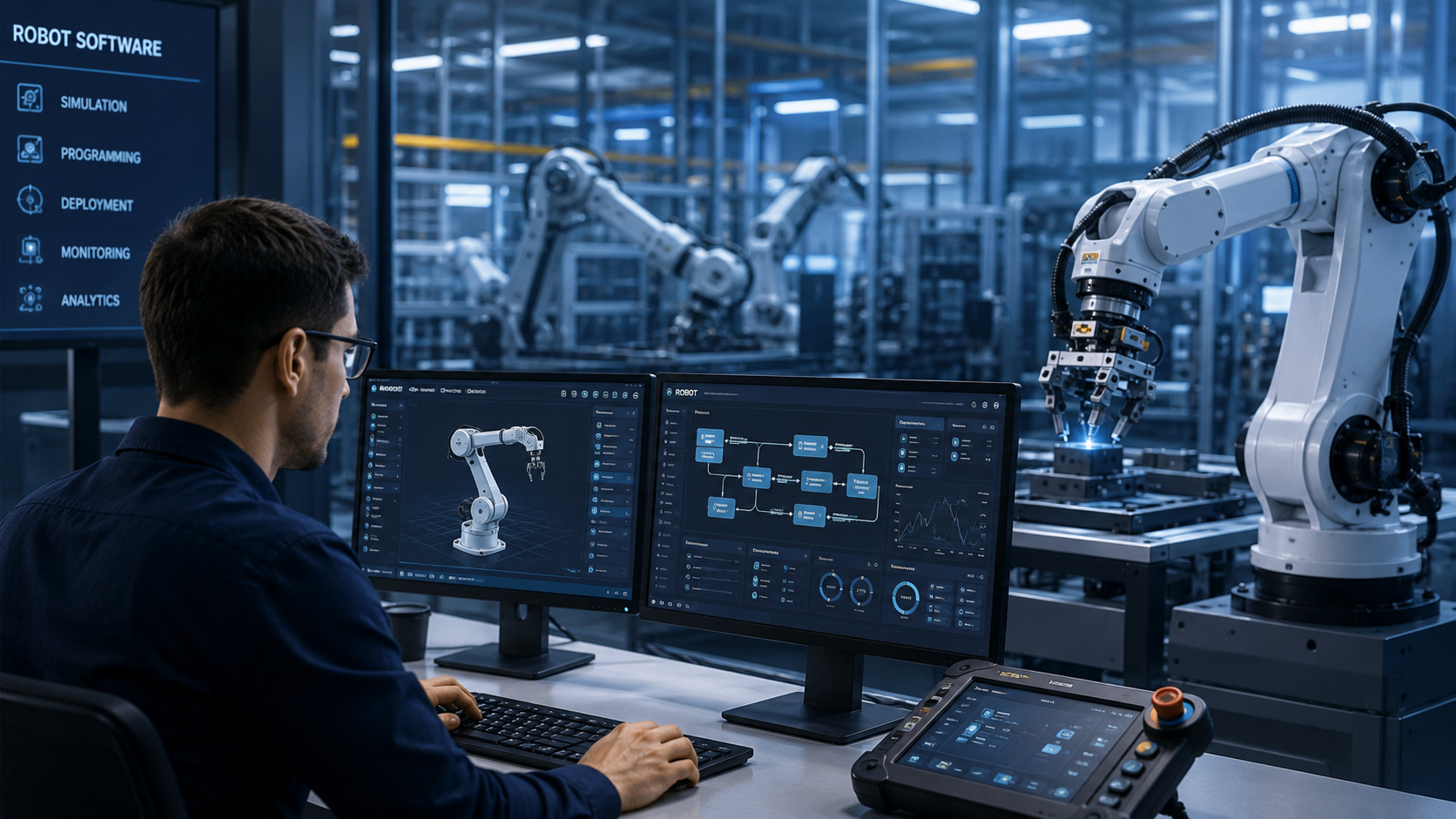
The Robot Software Market has become the intelligent core of modern automation, providing the essential algorithms, middleware, and applications that transform mechanical hardware into autonomous, adaptable, and intelligent systems. This industry encompasses a vast ecosystem of software types, including data management and analysis, communication management, recognition, simulation, and predictive maintenance, which are critical for both industrial and service robots. As of 2025, the market was valued at $22.58 billion, reflecting the accelerating shift from hardware-centric robotics to software-defined intelligence, where value creation increasingly depends on AI, analytics, and connectivity [citation:url]. The sector is characterized by its dynamic evolution, driven by the convergence of AI, cloud computing, and edge technologies.
The competitive landscape features a mix of established industrial automation giants and innovative software-centric players. Key players such as ABB Ltd, FANUC Corporation, Siemens AG, KUKA AG, Yaskawa Electric Corp., Mitsubishi Electric, NVIDIA Corporation, and Universal Robots dominate the market. ABB and FANUC lead with comprehensive, full-stack industrial robot control solutions. Siemens leverages its extensive PLM and simulation ecosystem, while NVIDIA provides the foundational GPU-accelerated computing platforms for robot AI applications. The market is moderately concentrated, with the top five vendors holding an estimated 35-42% revenue share, fostering a dynamic environment of both competition and collaboration [citation:url].
Several powerful drivers are propelling the industry forward. The regulatory push for virtual safety validation, such as the EU's Machinery Regulation mandating digital twins by 2027, is a primary catalyst, driving demand for robotic simulation software [citation:url]. The acceleration of edge AI inference, with powerful modules like NVIDIA's Jetson Thor, is enabling real-time, on-device decision-making, reducing reliance on cloud latency [citation:url]. The rise of Robot-as-a-Service (RaaS) and subscription models is democratizing automation, converting high capital expenditures into manageable operational expenses and broadening the market to SMEs [citation:url].
The future outlook for the robot software industry is exceptionally robust, with projections indicating growth to $142.74 billion by 2035, at a staggering CAGR of 20.10% [citation:url]. The market is expected to benefit from the integration of generative AI for task programming, the monetization of digital twins through Simulation-as-a-Service, and the expansion into emerging-market factory automation [citation:url]. As robots evolve from programmed machines to intelligent, learning agents, the robot software market is poised to become the primary driver of value in the automation industry.
Top 10 Trending Reports
- Memes & Cultura da Comunidade
- Artigos e Análises
- Pessoal
- Oportunidade
- Projeto
- Conhecimento
- Dúvidas & Pedidos de Ajuda
- Reflexões & Opiniões
- Tendências
- Juegos
- Lançamentos & Anúncios
- Saúde & Bem Estar
- Eventos & Convites
- Conteúdo Técnico
- Entretenimento
- Networking
- Festas & Festivais
- Religião
- Iniciativas de Impacto
 Spanish
 English
 Arabic
 French
 Portuguese
 Deutsch
 Turkish
 Dutch
 Italiano
 Russian
 Romaian
 Portuguese (Brazil)
 Greek