


The Physical Foundation of the Digital World: The Data Center Construction Industry
Building the Engines of the Cloud
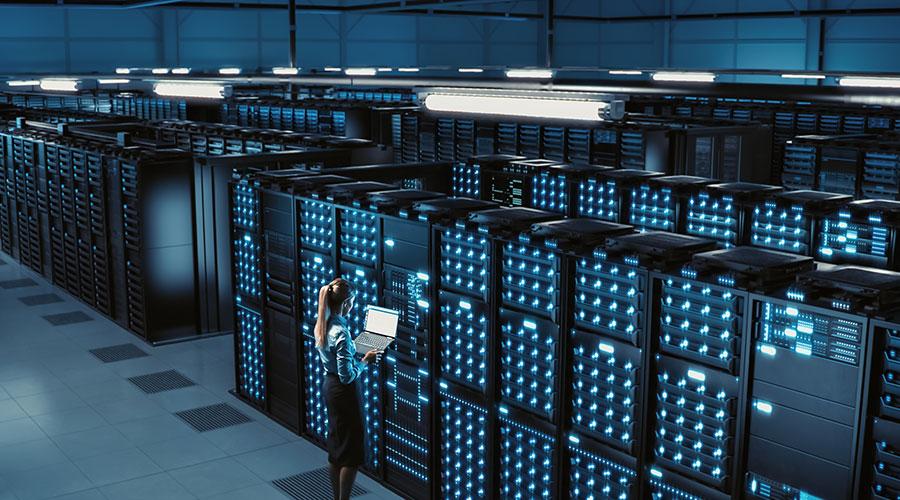
In an age where every click, stream, and transaction is powered by a distant server, the global Data Center Construction industry has emerged as the essential, yet often unseen, force building the physical infrastructure of our digital lives. This massive and highly specialized sector is responsible for the design, engineering, and construction of the secure, power-intensive buildings that house the world's computing and storage resources. A comprehensive market report on the Data Center Construction industry highlights its critical role as the bedrock upon which cloud computing, artificial intelligence, and the Internet of Things are built. Unlike a standard commercial building, a data center is a complex ecosystem engineered for maximum uptime, security, and efficiency. The industry brings together experts in structural engineering, electrical and mechanical systems, and cybersecurity to create these digital fortresses. As the global demand for data continues to explode, the data center construction industry is in a state of perpetual and accelerated growth, racing to build the capacity needed to power the future of the digital economy.
The Four Pillars: Power, Cooling, Connectivity, and Security
The construction of a modern data center revolves around four critical and interdependent pillars. The first and most crucial is Power. A large data center can consume as much electricity as a small city. The construction involves building a highly resilient electrical infrastructure, including connections to multiple utility grids, massive uninterruptible power supply (UPS) systems to provide battery backup, and fleets of large diesel generators to ensure continuous operation during a prolonged outage. The second pillar is Cooling. The thousands of servers packed into a data center generate an immense amount of heat that must be constantly removed. This involves the construction of sophisticated cooling systems, from traditional Computer Room Air Handlers (CRACs) and chiller plants to more advanced liquid cooling solutions. The third pillar is Connectivity. A data center is a major intersection of the internet. Construction includes building multiple, redundant fiber optic entry points and extensive internal network cabling to connect all the servers. The final pillar is Security. This involves building a physically secure perimeter with fences, gates, and vehicle barriers, as well as multiple layers of internal security, including biometric access controls, mantraps, and pervasive video surveillance to protect the invaluable data within.
The Different Flavors of Data Centers
The data center construction industry serves several different types of customers, each with unique requirements. The most significant segment is the Hyperscale Data Center, built by or for the major public cloud providers like Amazon Web Services (AWS), Microsoft Azure, Google Cloud, and Meta. These are colossal facilities, often spanning over a million square feet, built for massive scale, efficiency, and speed-to-market. The construction of these facilities is often based on highly standardized, repeatable designs that can be deployed globally. The second major type is the Colocation Data Center. These are built by companies like Equinix and Digital Realty. They act as "landlords," building the data center and then leasing out secure space, power, and cooling to hundreds of different enterprise customers. This allows businesses to house their IT equipment in a world-class facility without the massive capital expenditure of building their own. The third type is the Enterprise Data Center, which is built and operated by a single company for its own internal use. While the trend for many enterprises is to move to the cloud or colocation, many large organizations, particularly in finance and healthcare, still build and maintain their own private data centers for security and control reasons.
The Relentless Drivers of a Booming Industry
The data center construction industry is experiencing a historic boom, propelled by a set of powerful and relentless global trends. The primary driver is the exponential growth of data. The proliferation of smartphones, the rise of high-definition video streaming, the explosion of social media content, and the data generated by billions of Internet of Things (IoT) devices all create a tidal wave of data that needs to be stored and processed. The second major driver is the widespread enterprise migration to the cloud. As businesses of all sizes shut down their own server rooms and move their applications to public cloud providers, it creates a massive and continuous demand for the hyperscalers to build more data center capacity to house these workloads. The third, and increasingly most important, driver is the rise of Artificial Intelligence (AI) and Machine Learning (ML). Training and running large AI models, particularly generative AI, requires immense computational power from thousands of specialized processors (GPUs), which consume enormous amounts of power and generate intense heat, necessitating the construction of new data centers specifically designed for these high-density workloads.
Explore More Like This in Our Reports:
- Memes & Cultura da Comunidade
- Artigos e Análises
- Pessoal
- Oportunidade
- Projeto
- Conhecimento
- Dúvidas & Pedidos de Ajuda
- Reflexões & Opiniões
- Tendências
- Игры
- Lançamentos & Anúncios
- Saúde & Bem Estar
- Eventos & Convites
- Conteúdo Técnico
- Entretenimento
- Networking
- Festas & Festivais
- Religião
- Iniciativas de Impacto
 Russian
 English
 Arabic
 French
 Spanish
 Portuguese
 Deutsch
 Turkish
 Dutch
Dutch
 Italiano
 Romaian
 Portuguese (Brazil)
 Greek
Greek