


Hell Is Us Director Calls Silksong Shadow Drop 'A Little Callous'
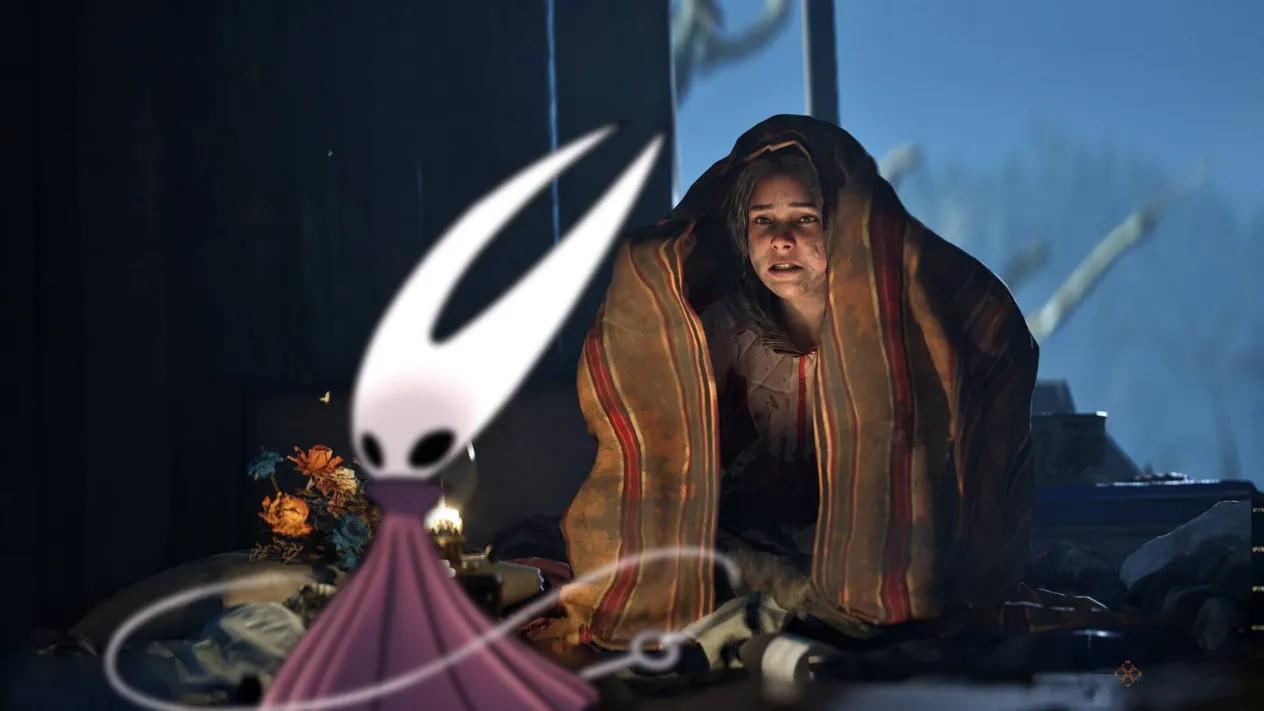
When Team Cherry finally lifted the curtain on Hollow Knight: Silksong’s release date, the indie world didn’t just sit up—it scrambled. After seven years of waiting, players had exactly two weeks to prepare. But while fans celebrated, a wave of developers quietly opened their calendars and did some panicked arithmetic. One of those developers, Jonathan Jacques-Belletête, director of Hell Is Us, has now described the last-minute announcement as “a little callous.”
Speaking on the Friends Per Second podcast, Jacques-Belletête did not mince words about the way the Silksong release date landed. He called the shadow drop a bold move from a studio that must have known its gravitational pull. “When you know you’re that big, I think a shadow drop is a bit like, wow,” he said. “As the ‘GTA 6 of indie’… to shadow drop something like this is a little callous.”
The issue wasn’t the quality of Silksong—it was the timing. Hell Is Us and Hollow Knight: Silksong both launched on September 4, 2025. A game of Silksong’s size getting a two-week warning left other studios scrambling. Some smaller teams moved their release dates to avoid the collision, a luxury not every project could afford.
Jacques-Belletête acknowledged that Team Cherry had every right to pick its date, but the fallout was uneven. “We’re still much bigger than some of the smaller ones who would have gotten a lot more affected and who decided to change their dates,” he explained. “Changing the date of Hell Is Us would have been a pretty big endeavour.” Marketing plans, retail coordination, and months of build-up would have been thrown into disarray. For a studio the size of Rogue Factor, shifting a launch at the eleventh hour was not just a matter of flipping a calendar page—it was a logistical sinkhole.
The numbers told a brutal story. While Silksong vacuumed up attention, Hell Is Us still managed to peak at nearly 5,000 concurrent players during its launch weekend. That might sound modest, but compare it to Atari’s Adventure of Samsara, a metroidvania that also launched on September 4, 2025. Its peak concurrent player count sat at 15. Fifteen. That is not a typo. The game had the misfortune of sharing a birthday with one of the most anticipated indie sequels in history, and it paid the price.
Other indie titles saw the writing on the wall and got out of Dodge. Baby Steps, Demonschool, and several smaller projects shifted their dates rather than face the Silksong steamroller. In hindsight, that looked like the smart play. No amount of goodwill could compete with a shadow-dropped juggernaut.
| Game | Release Decision | Outcome |
|---|---|---|
| Hell Is Us | Held its ground | Peaked near 5,000 concurrent players |
| Adventure of Samsara | Held its ground | Peaked at 15 concurrent players |
| Baby Steps / Demonschool | Moved | Avoided a direct launch collision |
Looking back from 2026, the whole episode remains a case study in how one big announcement can send shockwaves through the indie ecosystem. Jacques-Belletête does not seem bitter—he is happy the team stuck to its guns. But he also does not sugarcoat the reality: when a game as massive as Silksong appears out of nowhere, the little guys have to make impossible choices. Some dodge. Some hold the line. And some, like Adventure of Samsara, simply get caught in the blast radius.
The director’s “callous” comment may ruffle feathers, but it names a real tension in the industry. There is no rule that says a giant must give smaller studios breathing room. Yet for developers who spent years polishing their games, a two-week notice can feel like showing up to a knife fight only to find the other guy brought a tank. In the end, Hell Is Us survived the collision, but the scars—and the what-ifs—remain.
For players, the silver lining of these overcrowded launch windows is that smart spending has never been more important. With so many releases landing on the same day—and with some of them vanishing into obscurity within hours—savvy shoppers have learned to wait, compare, and strike when the price is right. Whether it's a hidden gem that got swept up in a bigger launch or a AAA title that slipped under the radar, there's no shame in holding out for a better deal before making the call.
That's where a little patience pays off. Instead of paying full price for games that might drop in value just weeks later, seasoned players turn to price-tracking tools and storefront aggregators to find the best deal across the platforms they trust. In an industry where timing can mean the difference between a hit and a footnote, waiting for the right moment to buy is sometimes the smartest move a player can make—especially once the steamroller has already passed.
- Memes & Cultura da Comunidade
- Artigos e Análises
- Pessoal
- Oportunidade
- Projeto
- Conhecimento
- Dúvidas & Pedidos de Ajuda
- Reflexões & Opiniões
- Tendências
- Jeux
- Lançamentos & Anúncios
- Saúde & Bem Estar
- Eventos & Convites
- Conteúdo Técnico
- Entretenimento
- Networking
- Festas & Festivais
- Religião
- Iniciativas de Impacto
 French
 English
 Arabic
 Spanish
 Portuguese
 Deutsch
 Turkish
 Dutch
Dutch
 Italiano
 Russian
 Romaian
 Portuguese (Brazil)
 Greek
Greek