


The Mind's Future: Exploring Top Brain Computer Interface Market Trends Today
The Evolving Frontier of Human-Computer Interaction
The Brain-Computer Interface market is not just a single technology but a rapidly evolving field where multiple scientific and engineering disciplines converge. To understand its future, it is essential to track the key Brain Computer Interface Market Trends that are shaping its development. These trends are pushing the boundaries of what is possible, making BCIs more powerful, less invasive, and more accessible. The industry is moving from purely academic research to the development of real-world products, driven by breakthroughs in materials science, AI, and our understanding of the brain. The trends reflect a dual path: one focused on creating life-changing medical interventions and the other on building the next generation of consumer computing platforms. From the development of wireless, fully implantable devices to the use of generative AI to decode complex thoughts, the pace of innovation is staggering. These trends offer a glimpse into a future where the line between the human mind and the digital world becomes increasingly blurred.
The Trend Towards Less Invasive and More Biocompatible Implants
While non-invasive BCIs are great for consumer applications, high-performance medical BCIs have traditionally required open-brain surgery to implant rigid electrode arrays. A major trend in the medical BCI space is the development of less invasive and more biocompatible implantable devices. The goal is to achieve high-quality signal acquisition without the high risks associated with a craniotomy. A leading example of this is the endovascular approach, pioneered by companies like Synchron. Their "stentrode" device is delivered to the brain through the jugular vein and expanded inside a blood vessel adjacent to the motor cortex, where it can record neural signals from the inside out. Another trend is the development of flexible, polymer-based electrodes that can conform better to the surface of the brain, causing less tissue damage and providing more stable long-term recordings than rigid silicon probes. These innovations are critical for making implantable BCI technology safer, more accessible to a wider range of patients, and more viable as a long-term clinical solution.
The Power of AI in Decoding and Generative Models
The single most powerful trend driving progress across the entire BCI industry is the application of advanced Artificial Intelligence and deep learning. The ability of modern AI models to find subtle patterns in complex, noisy data is perfectly suited to the challenge of decoding brain signals. This has led to a dramatic improvement in the accuracy and speed of BCIs. The trend is moving beyond simply classifying simple motor intentions (e.g., "move left" or "move right"). Researchers are now using more sophisticated AI models to decode more complex information. A groundbreaking trend is the use of generative AI to reconstruct speech or even images from brain activity. By training large models on brain data recorded while a person is listening to speech or viewing images, researchers have been able to generate intelligible speech or recognizable images directly from a person's thoughts. While still in its early stages, this trend points towards a future where BCI is not just a control interface but a true communication channel for unspoken thoughts and mental imagery, with profound implications for both medical and creative applications.
The Consumerization of EEG and the Rise of Neuro-Wearables
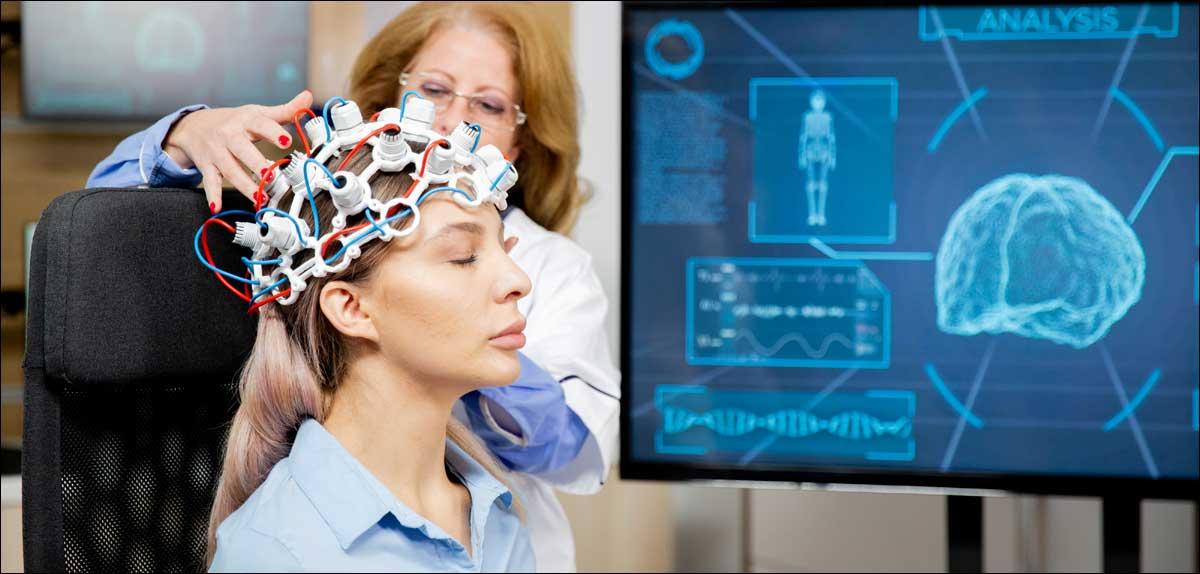
On the non-invasive side, a major trend is the "consumerization" of EEG technology. What was once bulky, expensive laboratory equipment is now being integrated into sleek, user-friendly consumer devices, often referred to as "neuro-wearables." We are seeing the emergence of BCI technology embedded in everyday form factors like headphones, earbuds, and even baseball caps. These devices are designed for a range of consumer applications focused on wellness, productivity, and entertainment. For example, some neuro-wearables offer real-time neurofeedback to help users improve their focus during work or to guide them into a meditative state. In gaming, these devices can be used to measure a player's emotional state or attention level, allowing the game to adapt its difficulty or atmosphere in real-time. This trend is being driven by the decreasing cost of sensors and the increasing power of mobile processors. By making BCI technology more accessible, comfortable, and seamlessly integrated into devices we already use, this trend is laying the groundwork for the mass-market adoption of non-invasive brain-sensing technology.
➤ Latest Market Intelligence from Market Research Future:
- Memes & Cultura da Comunidade
- Artigos e Análises
- Pessoal
- Oportunidade
- Projeto
- Conhecimento
- Dúvidas & Pedidos de Ajuda
- Reflexões & Opiniões
- Tendências
- Oyunlar
- Lançamentos & Anúncios
- Saúde & Bem Estar
- Eventos & Convites
- Conteúdo Técnico
- Entretenimento
- Networking
- Festas & Festivais
- Religião
- Iniciativas de Impacto
 Turkish
 English
 Arabic
 French
 Spanish
 Portuguese
 Deutsch
 Dutch
Dutch
 Italiano
 Russian
 Romaian
 Portuguese (Brazil)
 Greek
Greek