


Double Nut DFU Series Ball Screw Selection
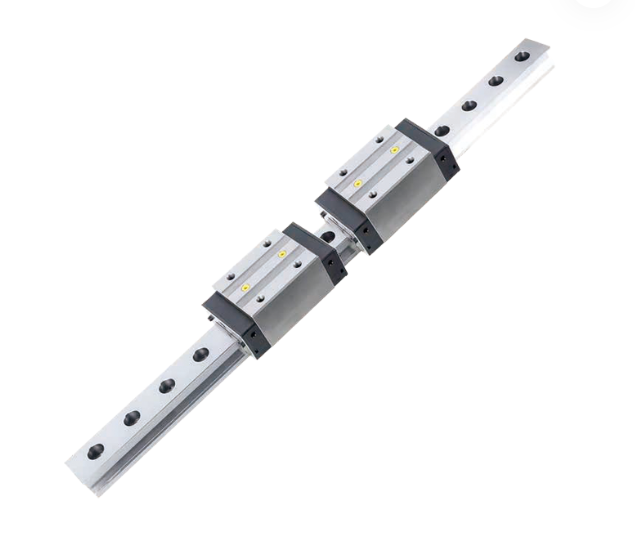
In modern industrial automation, accurate motion transmission is essential for improving equipment performance and maintaining consistent production quality. When engineers evaluate different transmission solutions, the Double Nut DFU Series Ball Screw stands out as an option worth considering for applications requiring stable movement and reliable positioning. By incorporating a double-nut configuration, the Double Nut DFU Series Ball Screw can help manage axial movement characteristics and support demanding mechanical operations. Understanding its structure, selection criteria, and potential applications helps manufacturers choose a solution that matches their equipment requirements.
Understanding the Double-Nut Structure
A ball screw converts rotary motion into linear movement through the interaction of rolling balls between the screw shaft and nut assembly. Compared with conventional sliding mechanisms, this rolling contact can help reduce friction and support efficient motion transmission. In a double-nut design, two nuts work together within the assembly, allowing the arrangement to be configured to meet particular axial clearance and stiffness requirements.
The final performance depends on factors such as preload configuration, manufacturing accuracy, lubrication, and installation conditions. Engineers should evaluate these elements together rather than selecting a component based on its name alone.
Supporting Accurate Industrial Motion
Precision motion systems often need to repeat the same movements over long operating periods. Ball screw assemblies can contribute to controlled positioning when the complete mechanical system is properly designed and maintained. Depending on the selected specifications, a DFU series model may be suitable for equipment that requires dependable linear movement and consistent operational behavior.
Applications can include CNC machinery, automated production equipment, precision positioning tables, and other industrial systems. Actual suitability depends on load capacity, travel distance, operating speed, required accuracy, and the working environment. Matching these parameters to the application helps prevent unnecessary wear and performance limitations.
Wangong: Selecting the Right Configuration
Choosing a suitable ball screw begins with understanding how the component will be used. Buyers should identify the axial load, expected duty cycle, travel length, and positioning requirements before comparing available configurations. Screw diameter, lead, overall length, accuracy grade, and nut dimensions are also important considerations.
For projects with limited installation space, checking the complete assembly dimensions can help avoid interference with surrounding components. Engineers should also confirm mounting arrangements and compatibility with bearings, couplings, motors, and support structures. Discussing these requirements with a qualified supplier can make the selection process more efficient and reduce the likelihood of specification mismatches.
Maintenance for Long-Term Operation
Even a well-selected ball screw requires appropriate installation and regular maintenance. Correct alignment helps distribute loads more evenly and reduces unwanted stress on the screw and nut assembly. Improper mounting, contamination, or insufficient lubrication may affect movement quality and shorten service life.
A practical maintenance plan should include checking lubrication conditions, inspecting exposed surfaces, monitoring unusual noise, and observing changes in positioning performance. The recommended inspection frequency depends on operating speed, load, environmental conditions, and manufacturer guidance. Keeping accurate maintenance records also helps technicians identify gradual changes before they cause unexpected interruptions.
Improving Equipment Reliability Through Planning
Selecting a ball screw is not simply a component purchasing decision. It is part of a broader effort to balance precision, productivity, maintenance needs, and overall equipment cost. Reviewing technical requirements early helps manufacturers compare alternatives and identify a configuration that supports their intended production process.
Before placing an order, buyers should confirm technical drawings, dimensional tolerances, performance specifications, delivery expectations, and any customization requirements. For more information about available products and ball screw solutions, visit https://www.wangong.net/ and explore the options that best match your machinery design and operational goals.
- Memes & Cultura da Comunidade
- Artigos e Análises
- Pessoal
- Oportunidade
- Projeto
- Conhecimento
- Dúvidas & Pedidos de Ajuda
- Reflexões & Opiniões
- Tendências
- Spellen
- Lançamentos & Anúncios
- Saúde & Bem Estar
- Eventos & Convites
- Conteúdo Técnico
- Entretenimento
- Networking
- Festas & Festivais
- Religião
- Iniciativas de Impacto
 Dutch
 English
 Arabic
 French
 Spanish
 Portuguese
 Deutsch
 Turkish
 Italiano
 Russian
 Romaian
 Portuguese (Brazil)
 Greek